Sonnet Scanner
Most people with textured hair are confused about what is actually changing.
Sonnet Scanner keeps a clear, consistent picture record of hair and scalp over time — so clients see what is changing and when it started, and stylists have proof to back up what they recommend.
Built for salons and the clients who trust them.
What it is
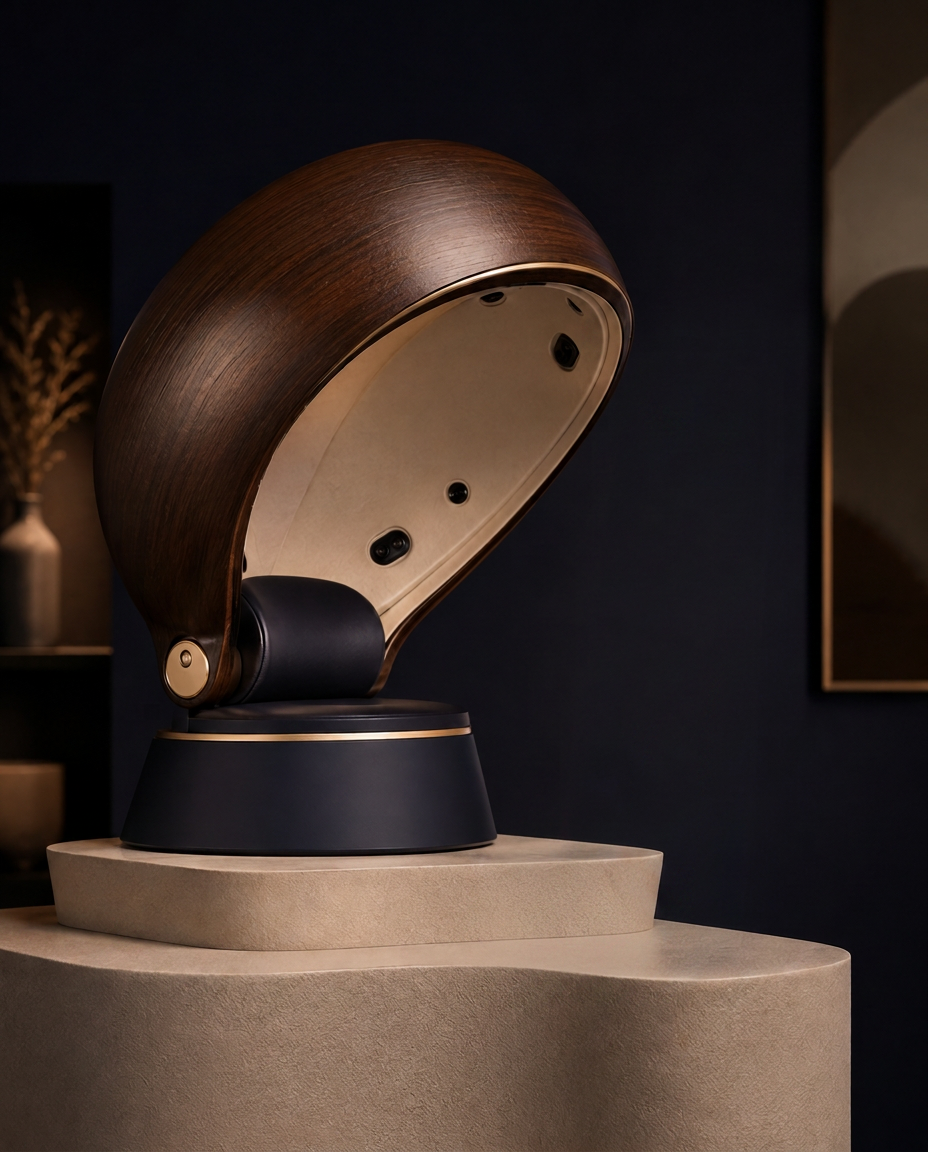
A camera and app that keeps a hair history, like a medical chart for hair.
Sonnet Scanner is a dedicated hair-analysis camera plus a companion app. It guides a scan, captures consistent images of hair and scalp — including the back and crown — and builds a personal timeline you can actually compare, month to month.
At home, it replaces guessing from mirror checks and old selfies. In a salon, it becomes a paid consultation tool: scan the client, show the change, recommend the plan, and rebook.
How it works
Four steps to a clearer picture.
01
Turn it on
Place the Sonnet Scanner on a flat surface and open the app.
02
Follow the prompts
Voice and visual guidance show you exactly how to position your head.
03
Complete the scan
The camera captures consistent angles, including the back and crown.
04
View your record
See your baseline, track changes, and connect trends to your routines.
The problem
Hair confusion is real — for clients and for the salons serving them.
“I cannot clearly see the back or crown of my head.”
Sonnet captures difficult angles consistently every scan.
“My hair used to respond well to this routine, but now it does not.”
Scans taken over months show when the change started and which routines lined up with it.
“Progress photos are inconsistent and hard to interpret.”
Standardized angle, lighting, distance, and image capture make comparisons useful.
“I noticed thinning or breakage too late.”
Regular scans can flag visible changes earlier, so you can adjust or seek help sooner.
“Advice for textured hair is often subjective.”
A personal visual baseline makes recommendations more individualized and less generic.
“As a stylist, I have no proof my treatment plan is working.”
Salons can show before-and-after scans, back up their recommendations, and rebook clients with confidence.
What the scan flags
Signals that show up in your record.
Guided Parting Mode
See the back of your head while you style.
Live camera guidance helps you create straighter parts and better see hard-to-reach areas while braiding, twisting, sectioning, or styling.
It turns the scanner into a practical styling companion, not just a diagnostic tool.
Open Parting Mode
Switch from scan mode to live guidance.
Follow the overlay
On-screen guides show where to part and section.
Style with visibility
See the crown and back without a second mirror.
The core insight
The camera is the entry point. The lasting value is the hair history it builds.
Every scan adds to a personal hair and scalp history — a saved set of pictures and notes that shows how hair changes month after month. Over time, Sonnet can connect what a person sees with what they actually do to their hair.
For salons, that history becomes a shared record: stylists can show clients real proof of progress, justify treatment plans, and keep clients coming back on a schedule.
We are building the hair history record for textured hair — for people and for the salons who care for them.
Why Sonnet
What makes this different.
Repeated scans
Not a one-time analysis. A saved hair history that improves with every use.
Difficult angles
Standardized capture of the back and crown, not just what you can see in a mirror.
Change detection
Progress tracking that surfaces trends instead of isolated snapshots.
Hair-health signals
Focused on scalp and strand health, not only product matching.
Built for salons too
A consultation tool stylists can charge for, with client records that drive repeat visits.
Textured-hair reality
Built around the specific concerns and routines of textured-hair care.
What is next
The scanner is the first product in a connected ecosystem.
Today it captures hair and scalp. Next, salon accounts let stylists manage client records, packages, and follow-up visits. Later, the scanner connects to the tools already in use — flat irons, blow dryers, protective-style trackers — to link styling behavior to results.
Why me
I grew up in a hair salon. Then I went away to school and lost access to everything I knew.
My mother ran a salon in Atlanta. I was surrounded by stylists, products, and community. But when I left for college, I did not have a trusted stylist nearby, could not find the right products, and my confidence suffered from the confusion.
I wanted to make us all less confused about our hair. That is why I started Sonnet.
I am not building this because I read a market report. I am building it because I lived the gap: the salon access, then the sudden loss of it. The confusion, then the decision to do something about it.
My background is a mix of legal advocacy, financial work, and community organizing — not because the names matter, but because each taught me how to learn fast, work across disciplines, and keep going when the problem is hard.
I believe textured-hair care should be simpler, more personal, and grounded in real data. Sonnet is my answer to that.

Caroline Sende
Founder, Sonnet
Stay in the loop
Be the first to know when Sonnet is ready.
Join the waitlist for early access, product updates, and behind-the-scenes progress.